Chapter II · The Arc of a Session
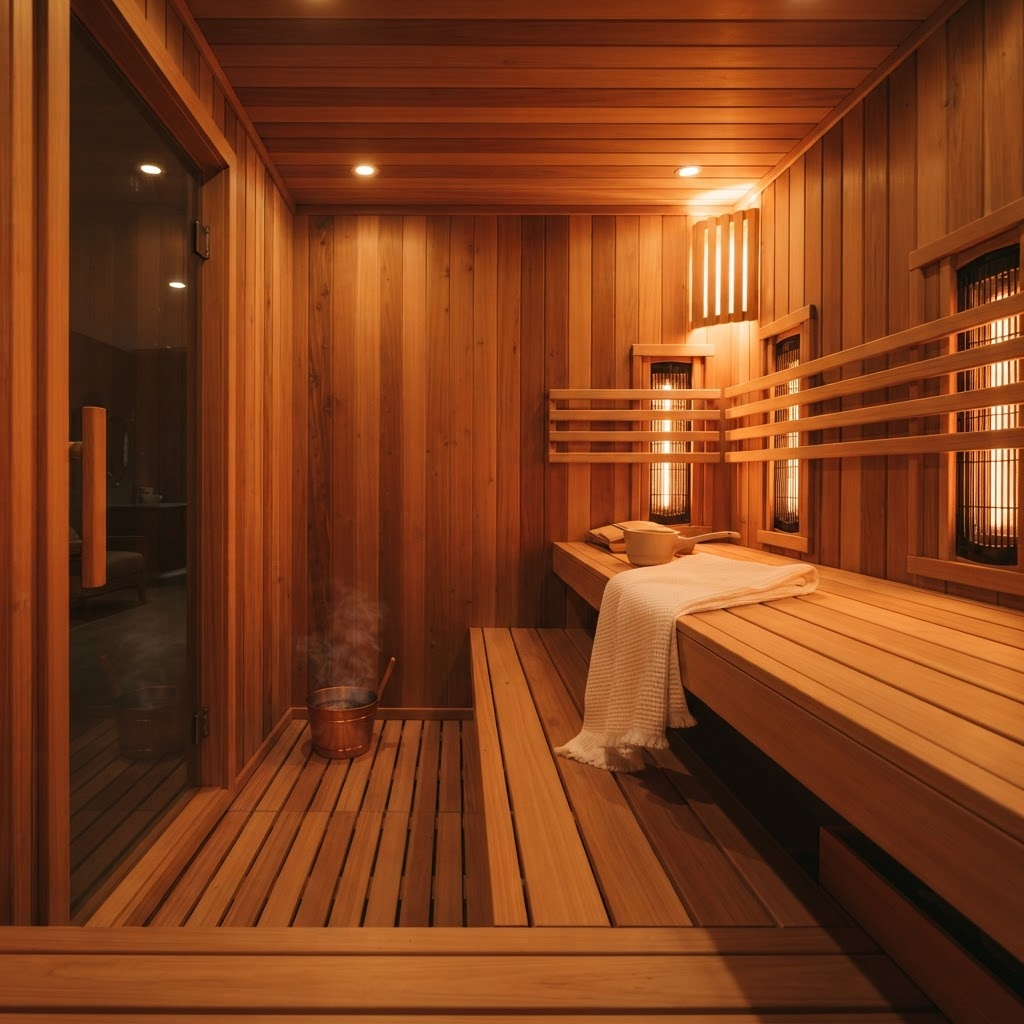
The body already knows how to heal. Infrared gives it the temperature to begin.
Near, mid, and far infrared wavelengths each penetrate to a different depth — near reaches the skin, mid the soft tissue, far the core. Together they raise internal temperature in a way ambient heat cannot replicate, triggering a cascade of cellular responses that the body recognises as a signal to repair.
Plate 01 · Wavelength & PenetrationEd. of 24
Depth at which far infrared wavelengths penetrate subcutaneous tissue
Light enters where heat cannot follow.
Infrared wavelengths between 3 and 50 microns pass through the skin and warm tissue from within — raising core temperature at ambient air temps of 120–140°F, a full 60° cooler than a traditional sauna.
Plate 02 · Heat Shock ProteinsEd. of 24
Cytoprotective protein upregulated by infrared heat exposure
The heat that stresses the cell is the same heat that makes it stronger.
Repeated infrared exposure upregulates heat shock proteins — molecular chaperones that repair damaged proteins, clear cellular debris, and prime the cardiovascular system. The same response is documented in population studies showing reductions in all-cause mortality.
Plate 03 · DetoxificationEd. of 24
Higher concentration of heavy metals in infrared sweat versus thermal sweat
Sweat induced by infrared carries more than heat away.
Infrared-induced sweat has been shown to contain significantly higher concentrations of heavy metals, BPA, and lipophilic toxins than sweat produced by ambient heat alone — the deeper thermal penetration mobilises compounds stored in adipose tissue.


